Few financial relationships are as iconic, or as complicated, as the one between gold and the U.S. dollar. For nearly a century, the two have danced together in a delicate, often opposite rhythm: when one rises, the other tends to fall. They’re like the financial world’s version of frenemies, deeply connected, constantly influencing each other, yet never fully aligned. Understanding this relationship means understanding the very foundation of global finance, because in many ways, the story of gold and the dollar is the story of trust.
It all began with the gold standard. For much of the 20th century, the U.S. dollar was literally backed by gold. Each dollar represented a specific amount of the metal, and foreign governments could exchange their dollars for gold at a fixed rate. This system made the dollar as good as gold, stable, credible, and globally respected. But as the U.S. economy grew and international trade expanded, there simply wasn’t enough gold to keep up. In 1971, President Richard Nixon ended the gold standard, “decoupling” the dollar from its golden anchor. From that moment on, the dollar became a fiat currency, backed not by metal, but by confidence.
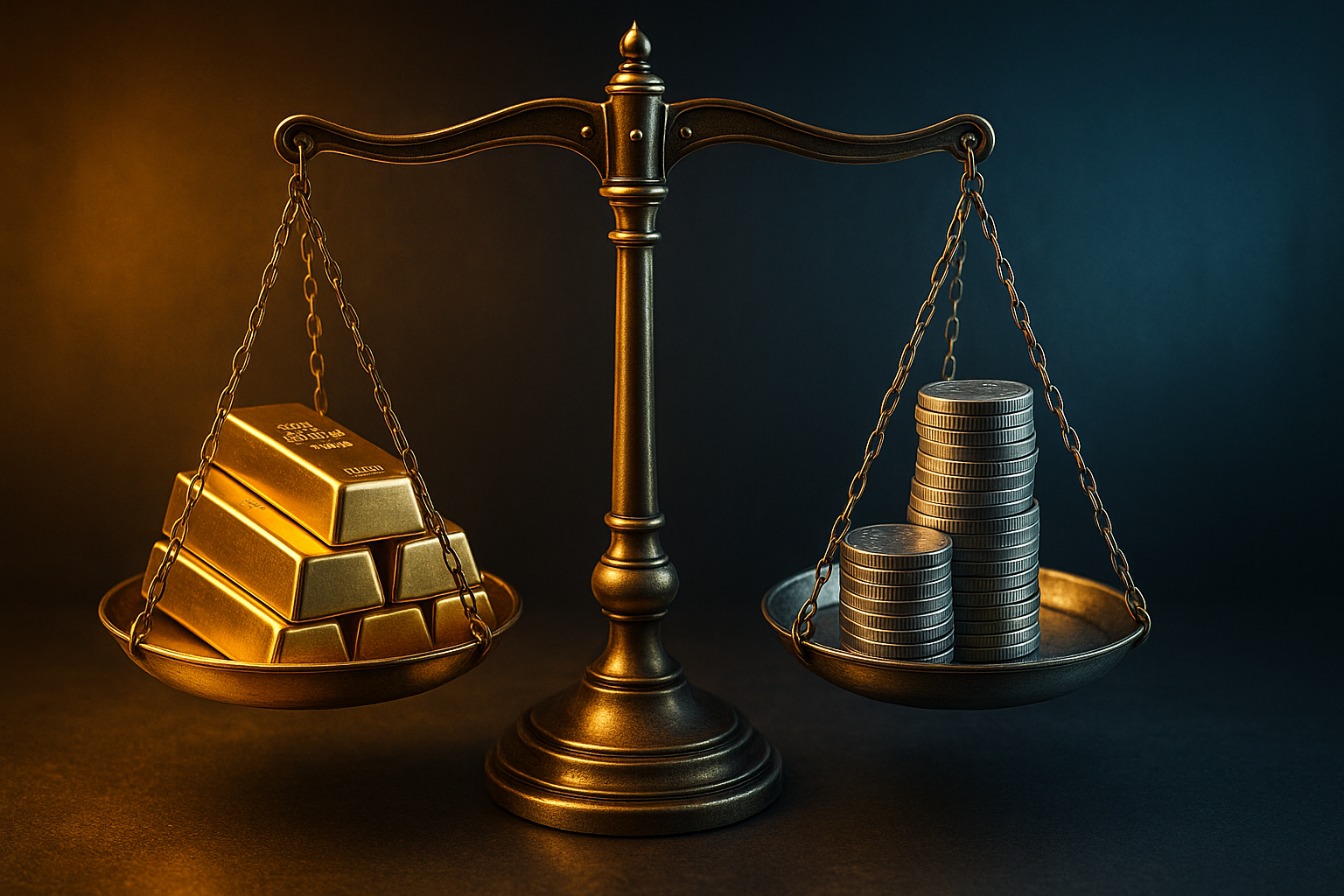
Since then, the two assets have developed an inverse relationship. When the dollar strengthens, usually due to rising interest rates or investor confidence in the U.S. economy, gold tends to weaken. After all, gold doesn’t pay interest, and a strong dollar makes it more expensive for foreign investors. Conversely, when the dollar stumbles or inflation fears rise, investors flock to gold as a safe haven. It’s financial gravity in action: money moves away from paper promises and back toward tangible security.
But the connection runs deeper than price charts. The U.S. dollar remains the world’s reserve currency, used for trade, oil, and international settlements. That gives America enormous economic influence, but it also means global trust in the dollar directly impacts gold demand. When geopolitical tensions flare or central banks diversify their reserves, gold becomes the universal plan B, a hedge against uncertainty in the dollar’s dominance. In recent decades, even as the dollar has held strong, countries like China and Russia have increased their gold reserves, quietly preparing for a world that might one day lean less on the greenback.
In the end, gold and the U.S. dollar are two sides of the same coin, one represents faith in governments, the other faith in scarcity. They’ll likely continue their push-and-pull dynamic for decades to come. When confidence in the dollar runs high, gold rests quietly in the background. But when doubt creeps in, the world always remembers where true value began, in something you can hold, not something you can print.