Every superhero needs a power source, and for Ethereum, that source is the smart contract. These digital agreements are what transformed Ethereum from a simple blockchain into a living, breathing ecosystem – a programmable world where money, logic, and automation meet. If Bitcoin proved that decentralized money could exist, Ethereum’s smart contracts proved that decentralized everything could. But what exactly are they, and why do they matter so much?
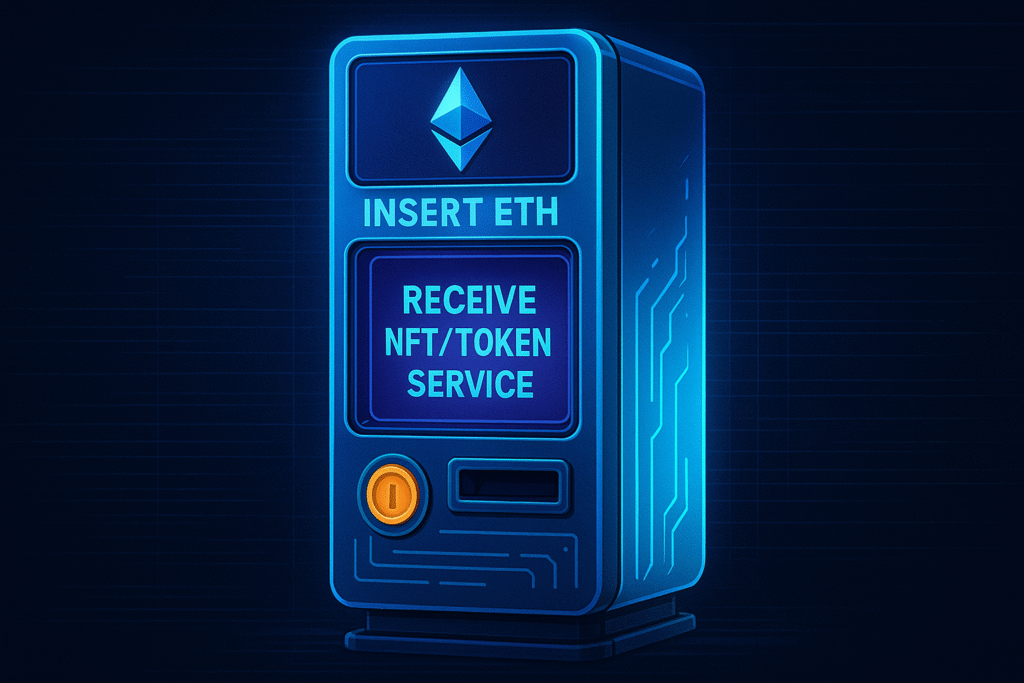
In the simplest terms, a smart contract is code that runs on the blockchain. It’s a set of “if-then” rules written by developers that execute automatically when certain conditions are met. Think of it like a vending machine: insert the right amount of ETH, and the machine (a.k.a. the contract) automatically gives you your token, NFT, or service. No cashier, no middleman, no trust issues – the machine just does what it’s programmed to do. Once a smart contract is deployed, it can’t be changed or tampered with, which means transactions happen transparently and without human bias.
What makes smart contracts so powerful is their versatility. They’re the invisible engine running decentralized finance (DeFi) platforms, NFT marketplaces, and even DAOs (decentralized autonomous organizations). Want to create a loan system without a bank? Use a smart contract. Want to sell digital art that pays royalties automatically to the artist every time it’s resold? That’s another smart contract. They eliminate middlemen by replacing legal agreements with mathematical certainty. In a sense, Ethereum turned lawyers into lines of code, and it’s working brilliantly.
Of course, power always comes with complexity. Smart contracts are only as good as the code behind them, and one tiny bug can lead to chaos, or a multimillion-dollar exploit. That’s why audits, security layers, and careful testing are crucial. Despite the risks, developers continue to build on Ethereum because of its robust infrastructure, developer tools, and massive network of users. It’s a bit like building an app for the world’s biggest app store – the audience is already there, and the ecosystem keeps growing.
Ultimately, smart contracts are more than just code – they’re a philosophy. They represent a world where trust is baked into the system itself, where agreements execute automatically, and where power shifts from centralized authorities to transparent protocols. Ethereum didn’t just invent a new kind of money; it invented a new kind of relationship between humans and technology. Smart contracts are the engine, but what they’re driving is much bigger – a decentralized web that runs on code instead of trust.