Key Takeaways
- Dogecoin’s 2025 surge was triggered by regulatory developments, not social media hype
- ETF-linked treatment under a proposed US Senate bill reduced perceived regulatory risk
- The move appears speculative, as Dogecoin’s long-term utility challenges remain
Dogecoin is back in motion in early 2025, but not for the reason traders have come to expect. Instead of viral tweets or celebrity endorsements, the latest surge in Dogecoin appears to be rooted in shifting signals from Washington.
A newly proposed US Senate crypto market structure bill has altered how certain digital assets may be regulated. Dogecoin, unexpectedly, has emerged as one of the beneficiaries, prompting a sharp short-term rally driven by policy expectations rather than social media momentum.
Regulation, Not Memes, Sparked Dogecoin’s Latest Move
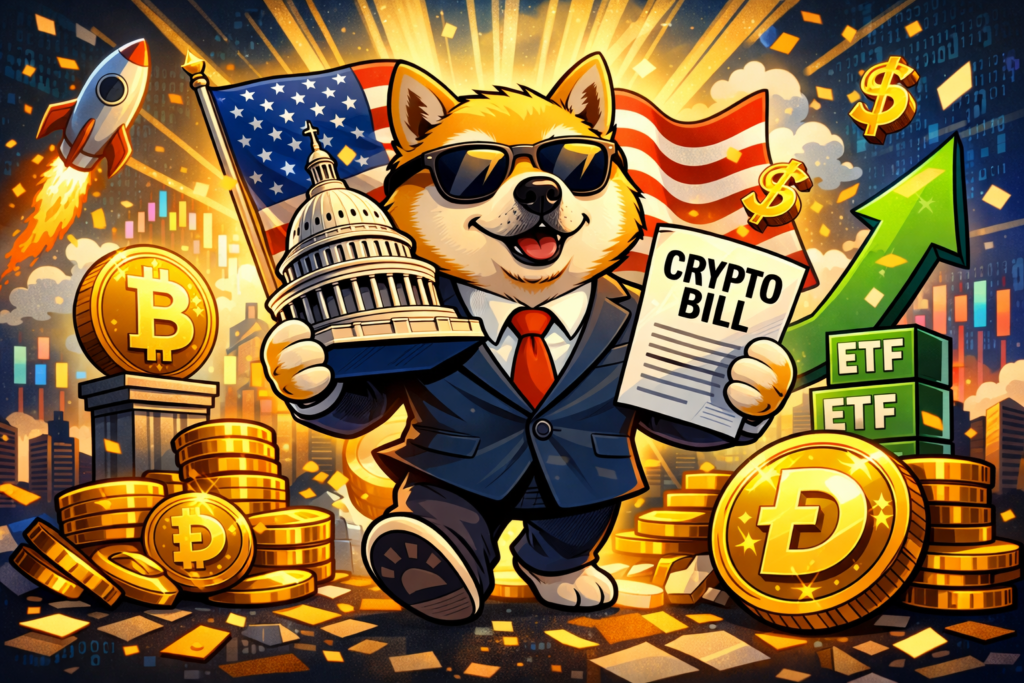
Dogecoin gained roughly 8% in a single day after reports highlighted a key provision in a draft Senate bill focused on crypto market structure. The proposal builds on prior legislative efforts to clarify how digital assets are categorized and regulated in the United States.
At the core of the bill is a distinction between assets subject to heavier oversight and those treated more like digital commodities. Under the draft language, cryptocurrencies that already serve as the underlying asset for approved exchange-traded products would automatically avoid stricter classifications.
Because Dogecoin already underpins spot exchange-traded products, it could qualify for lighter regulatory treatment if the bill becomes law. That possibility alone was enough to trigger renewed interest in Dogecoin across crypto markets.
Why ETF Status Matters More Than Ever for Dogecoin
ETF exposure has become a meaningful signal in crypto markets. For Dogecoin, ETF status offers two practical advantages.
First, it allows institutional and retail investors to gain exposure without directly holding DOGE tokens, reducing custody and operational hurdles. Second, it may provide insulation from future compliance burdens tied to more restrictive regulatory categories.
As news spread that Dogecoin could be treated similarly to Bitcoin under the proposed framework, traders reassessed its regulatory risk profile, driving a short-term price reaction rooted in perception rather than protocol changes.
Why the Rally Looks Speculative, Not Structural
Despite the enthusiasm, the regulatory boost may prove temporary. The Senate bill remains a draft and is still subject to extensive debate, revisions, and potential rejection. Even if passed, the final version could differ materially from its current form.
More importantly, regulatory classification alone does not address Dogecoin’s broader challenges. Reduced red tape can remove friction, but it does not create new use cases, increase network activity, or drive long-term adoption. As a result, the recent surge appears to reflect speculative positioning rather than a durable shift in Dogecoin’s fundamentals.
Dogecoin’s Core Challenge Remains Unchanged
Beyond regulation, Dogecoin continues to struggle with limited utility and slow development momentum. While its brand recognition and community remain strong, the project has seen relatively little innovation compared with other areas of the crypto ecosystem.
Emerging trends such as stablecoins, tokenized assets, and real-world settlement infrastructure are reshaping the industry, but largely without Dogecoin at the center. In fact, wider stablecoin adoption could eventually reduce Dogecoin’s relevance as a payment-focused token.
Regulatory clarity may help protect Dogecoin from downside risk, but it does not solve the question of long-term relevance.
When Policy Moves Prices but Fundamentals Still Matter
Dogecoin’s early-2025 rally underscores how sensitive crypto markets have become to regulatory signals. Being aligned with exchange-traded products and potentially avoiding stricter oversight improves Dogecoin’s standing in the short term.
However, sustainable growth will still depend on whether Dogecoin can evolve beyond its meme-driven origins. Regulation can change the rules, but it cannot replace utility.
FAQs
Why did Dogecoin surge in 2025?
Dogecoin surged after investors reacted to a proposed US crypto bill that could grant it lighter regulatory treatment due to its ETF status.
Is Dogecoin’s current rally driven by tweets or hype?
No. Unlike past rallies, Dogecoin’s recent move is linked to regulatory expectations rather than social media activity.
Does the new crypto legislation guarantee long-term gains for Dogecoin?
No. The bill is still in draft form, and regulatory clarity alone does not resolve Dogecoin’s long-term adoption and utility challenges.