Gold has been humanity’s favorite safety blanket for thousands of years, shiny, scarce, and trusted through every empire, crisis, and currency collapse. Then came Bitcoin: invisible, digital, and backed by nothing but code and consensus. The question has lingered ever since: could this internet-born invention actually replace gold as the world’s ultimate safe haven? It sounds almost heretical to traditional investors, but it’s a debate worth unpacking, because both assets tell the story of how humans define trust and value in an unpredictable world.
At first glance, gold and Bitcoin couldn’t be more different. Gold is tangible, heavy, and as old as civilization itself. Bitcoin, on the other hand, is weightless, borderless, and not even two decades old. Yet, they share the same fundamental trait: limited supply. There’s only so much gold in the Earth’s crust, and there will only ever be 21 million bitcoins. Both resist inflation and government manipulation, traits that make them attractive when central banks start printing money like it’s going out of style. The big difference? One sits in vaults; the other lives in digital wallets.
Supporters of Bitcoin argue that it’s simply a better version of gold, faster to move, easier to store, and impossible to counterfeit. You can send millions of dollars’ worth of Bitcoin across the world in minutes without armored trucks or customs declarations. Try doing that with gold bars. On top of that, Bitcoin’s verifiable scarcity and decentralized nature give it a purity of design that gold can’t match. It’s not subject to mining monopolies, political borders, or logistics; it’s value in pure digital form. For a generation raised online, that’s a compelling narrative.
But gold’s defenders have history on their side. For thousands of years, it has survived wars, depressions, and revolutions without needing Wi-Fi. Bitcoin, for all its brilliance, hasn’t yet been tested through multiple centuries of economic upheaval. Critics also point out its volatility; a safe haven that can drop 20% in a week doesn’t exactly calm the nerves during market panic. Gold, while less exciting, doesn’t need hype to prove its worth. It’s the tortoise in a race full of digital hares, and sometimes, slow and steady really does win.
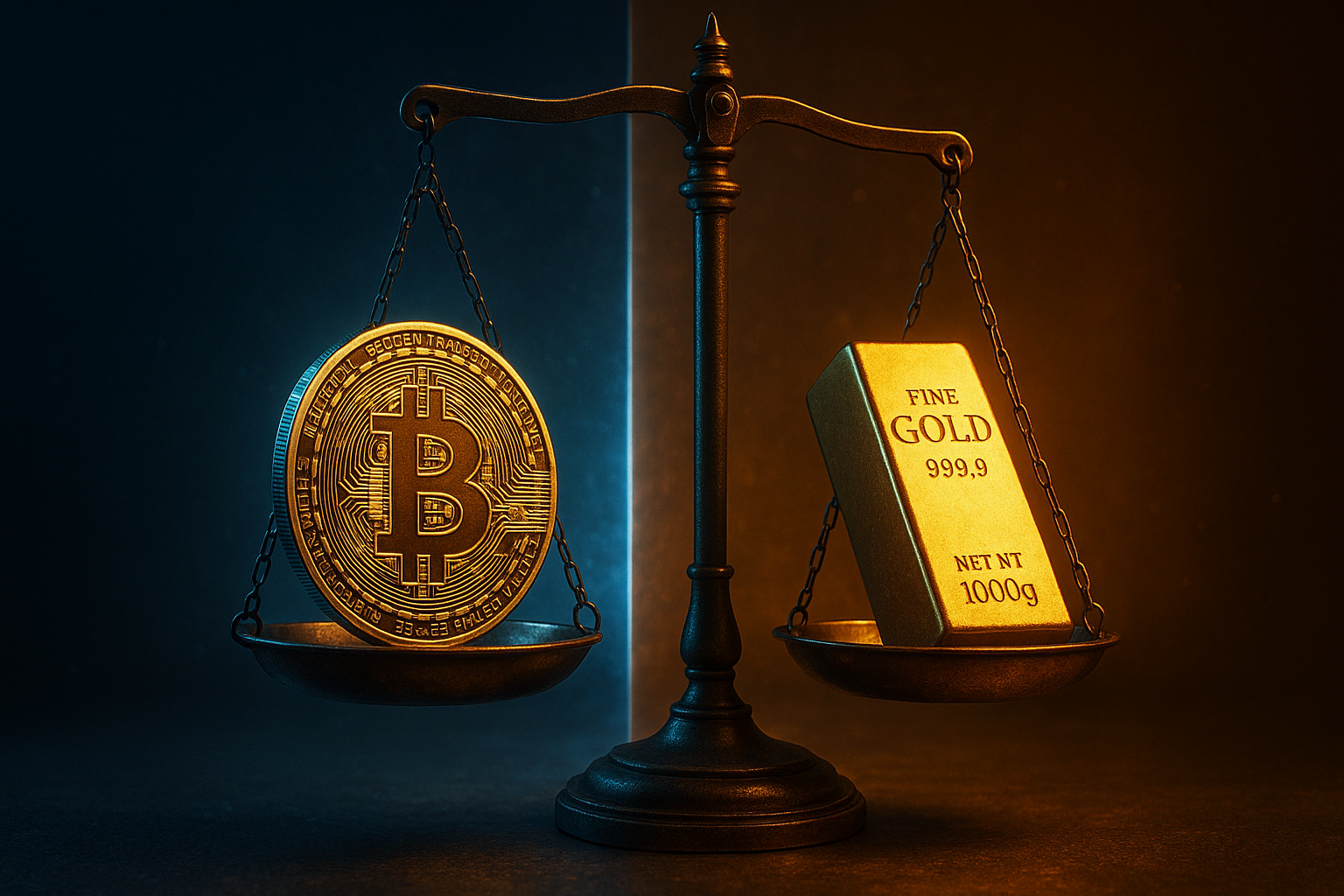
In the end, the battle between Bitcoin and gold might not need a winner. The modern investor can hold both, one for tradition, the other for transformation. Gold represents the past: enduring, tangible, and universally recognized. Bitcoin represents the future: programmable, transparent, and unstoppable. Perhaps the real “safe haven” isn’t choosing one over the other, but understanding how each reflects a different form of trust. Whether it’s measured in ounces or bytes, value has always been about belief, and Bitcoin has already proven it can make believers out of skeptics.