Highlights
- Bitcoin’s fixed supply gives it stronger scarcity dynamics than gold
- Institutional demand amplifies Bitcoin’s price sensitivity
- Gold provides stability, while Bitcoin offers asymmetric upside
At first glance, 2025 told a confusing story. Gold surged while Bitcoin stalled, leaving many investors asking an uncomfortable question. Did digital gold just lose to the real thing?
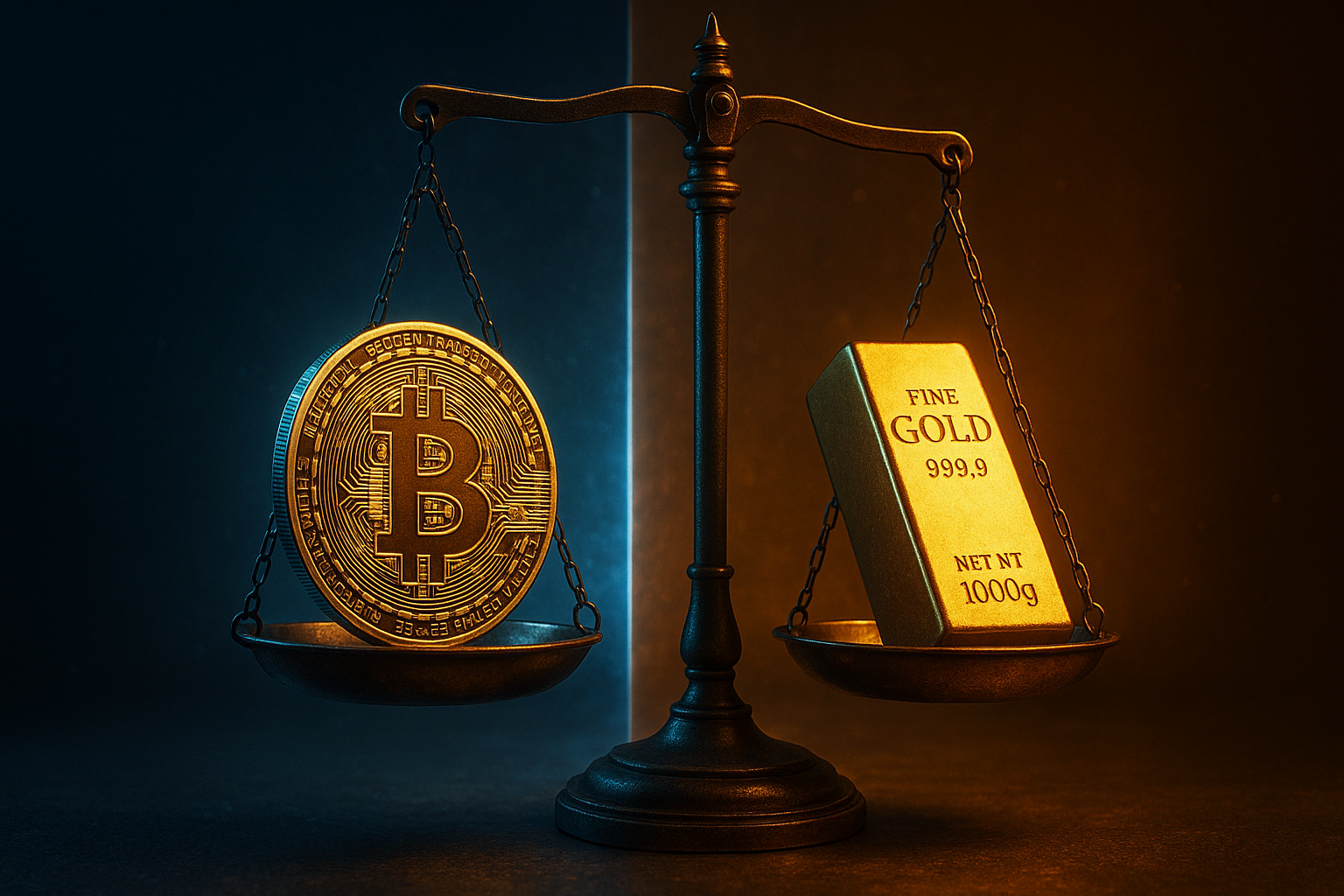
According to Cathie Wood, the answer is no. In fact, she believes the divergence makes Bitcoin’s long-term case even stronger. Her latest outlook reframes the Bitcoin vs Gold debate around one idea that matters more than short-term price charts. Scarcity that cannot be changed.
Gold’s Rally Is Not About Fear – It’s About Supply
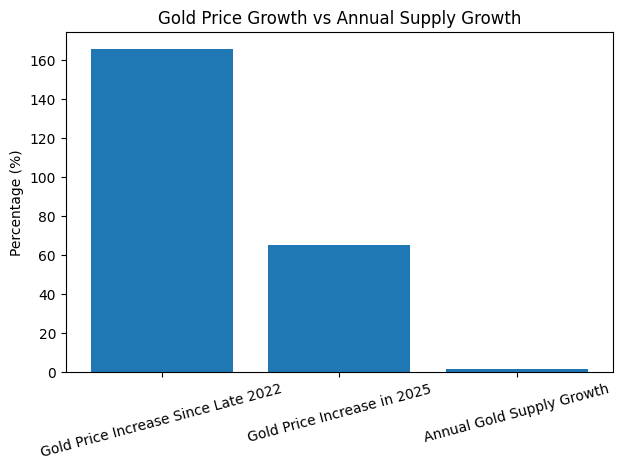
Gold climbed roughly 65% in 2025 and is up about 166% since late 2022. Many assume inflation panic is behind the move, but Wood sees something else at work. Global wealth has been growing faster than gold’s annual supply expansion, which sits near 1.8%.
Here’s the subtle but important issue. When gold prices rise, miners respond. More exploration, more production, more supply. Gold is scarce, but its scarcity is flexible. That flexibility caps how violently prices can react when demand spikes. This matters because scarcity is not just about how much exists. It’s about whether supply can respond when buyers rush in.
Bitcoin’s Supply Is Locked – Math Does the Policing
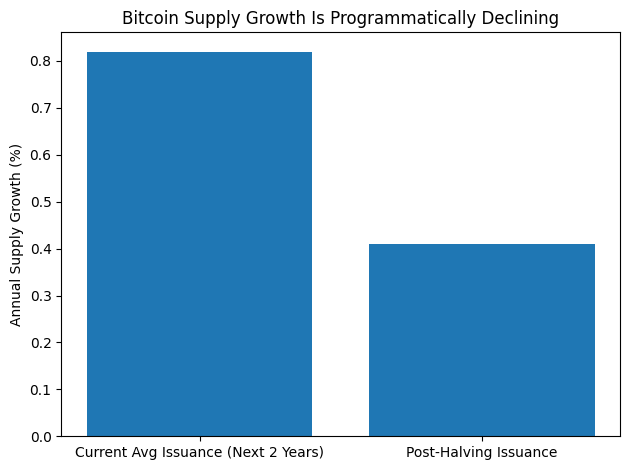
Bitcoin plays by different rules. Its supply growth is programmed and immune to market forces. According to Ark Invest, Bitcoin’s issuance rate will average about 0.82% annually over the next two years before slowing to roughly 0.41% after the next halving.
No miner can speed that up. No CEO can authorize more production. Bitcoin does not care about demand, price, or headlines.
That rigidity changes everything. When demand increases, whether from individuals, institutions, or ETFs, price becomes the only adjustment mechanism. This is why Wood argues Bitcoin behaves less like a commodity and more like a financial pressure system with no release valve.
Institutional Demand Changes the Equation
Spot Bitcoin ETFs have quietly altered the demand landscape. Unlike retail cycles driven by hype, ETF inflows represent long-term capital that tends to move slowly and stick around.
Matthew Hougan of Bitwise recently echoed this point, warning that sustained institutional buying could overwhelm Bitcoin’s fixed issuance. His phrase was blunt. A parabolic blowoff is possible when demand consistently outpaces new supply. Gold has never faced this dynamic. Bitcoin is facing it now.
Why Bitcoin’s Weak 2025 Is Not a Red Flag
Bitcoin fell about 6% in 2025, but context matters. After a powerful rally in 2024, consolidation is not a failure. It’s normal market behavior.
Georgii Verbitskii, founder of TYMIO, frames it simply. Capital rotates. When global currencies are being reassessed, hard assets regain attention. Bitcoin belongs in that category, but with one crucial advantage. Its supply cannot respond when prices rise.
That asymmetry means Bitcoin’s recoveries tend to be sharper than gold’s. When demand returns, price does not drift. It reacts.
Gold’s Historical Signal Is Flashing Yellow
Wood adds a longer-term macro lens that many investors miss. The ratio of gold’s market capitalization to the M2 money supply has reached levels last seen in the early 1930s and 1980s.
Historically, those moments marked extremes. Gold dominance faded, and equities performed strongly in the years that followed. This does not mean gold collapses tomorrow. It does suggest gold may be closer to maturity in its cycle than Bitcoin. For allocators, timing matters less than positioning.
Bitcoin as a Diversification Tool, Not a Gamble
One of the most overlooked points in the Bitcoin vs Gold debate is correlation. Bitcoin’s correlation with gold is lower than the correlation between stocks and bonds.
That matters. It means Bitcoin is not just a bet on price appreciation. It can serve as a portfolio diversifier with asymmetric upside. For investors chasing higher returns per unit of risk, that combination is rare. Gold preserves. Bitcoin amplifies. Both can coexist, but they play very different roles.
Bitcoin vs Gold: A Clear Structural Comparison
| Feature | Bitcoin | Gold |
| Annual Supply Growth | ~0.82% dropping to ~0.41% | ~1.8% |
| Supply Flexibility | Fixed and immutable | Can increase with mining |
| Institutional Access | Spot ETFs expanding | Long established |
| Correlation Benefits | Low correlation with traditional assets | Higher correlation with risk-off cycles |
| Upside Profile | Asymmetric | Stability focused |
Why This Debate Matters Going Into 2026
The real takeaway is not about choosing sides. It’s about understanding structure. Gold offers stability and history. Bitcoin offers engineered scarcity in a world where demand is becoming institutional, not speculative.
As Verbitskii puts it, this is less a buy or sell moment and more a hold conversation. Gold anchors portfolios. Bitcoin stretches them upward. If history is any guide, scarcity that cannot bend tends to surprise people on the upside.
Frequently Asked Questions for the Bitcoin vs Gold Debate
Is Bitcoin really scarcer than gold?
Yes. Gold supply can expand through mining, while Bitcoin’s issuance is mathematically fixed and cannot respond to demand.
Why did gold outperform Bitcoin in 2025?
Gold benefited from global wealth growth and defensive positioning, while Bitcoin consolidated after a strong 2024 rally.
Can Bitcoin replace gold as a store of value?
Bitcoin is not replacing gold, but it is emerging as a complementary store of value with different risk and return characteristics.
How do Bitcoin ETFs affect price?
ETFs introduce steady institutional demand that can exceed Bitcoin’s fixed supply, increasing upward price pressure.
Is Bitcoin riskier than gold?
Yes, Bitcoin is more volatile. However, that volatility also enables higher potential returns, especially during demand surges.