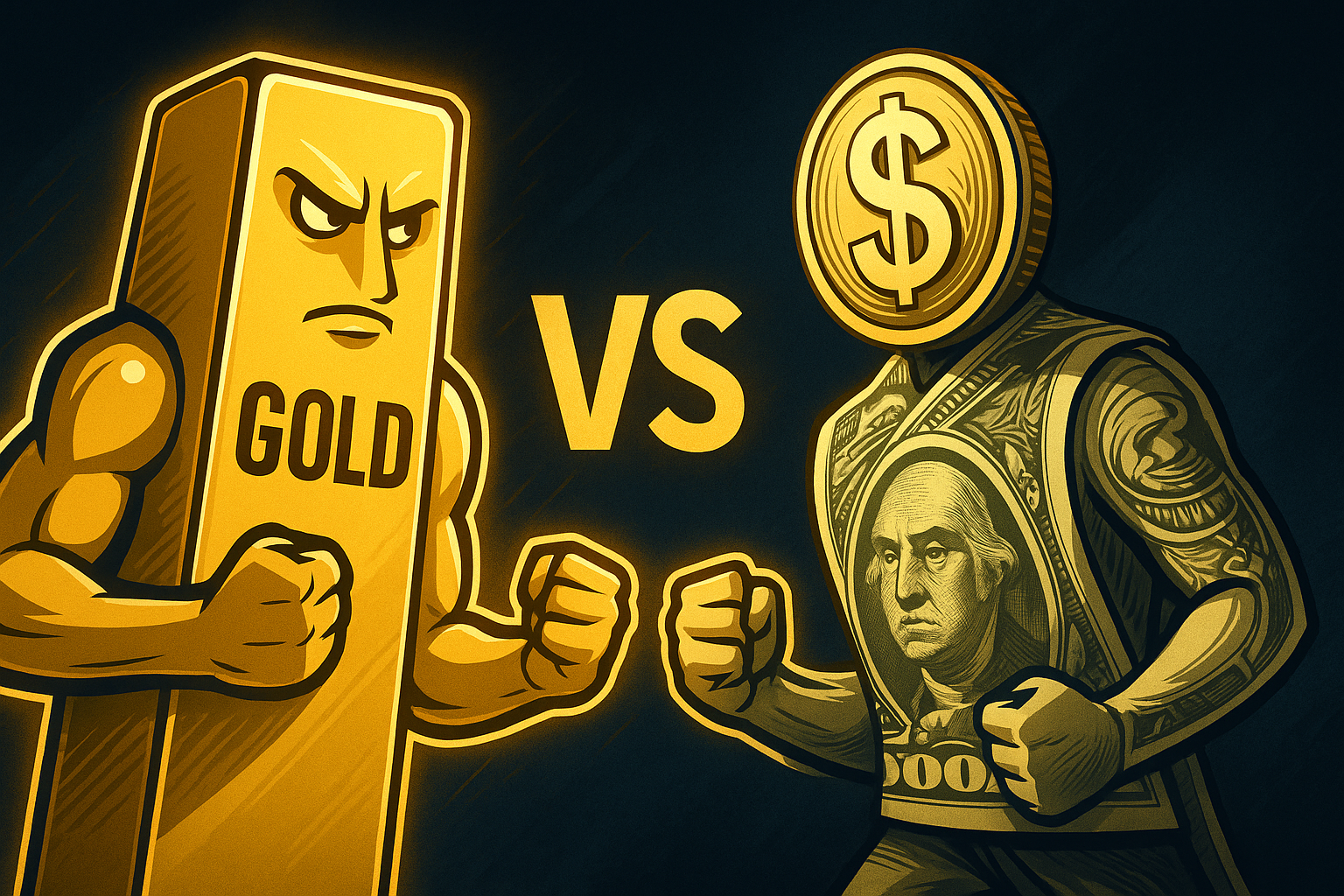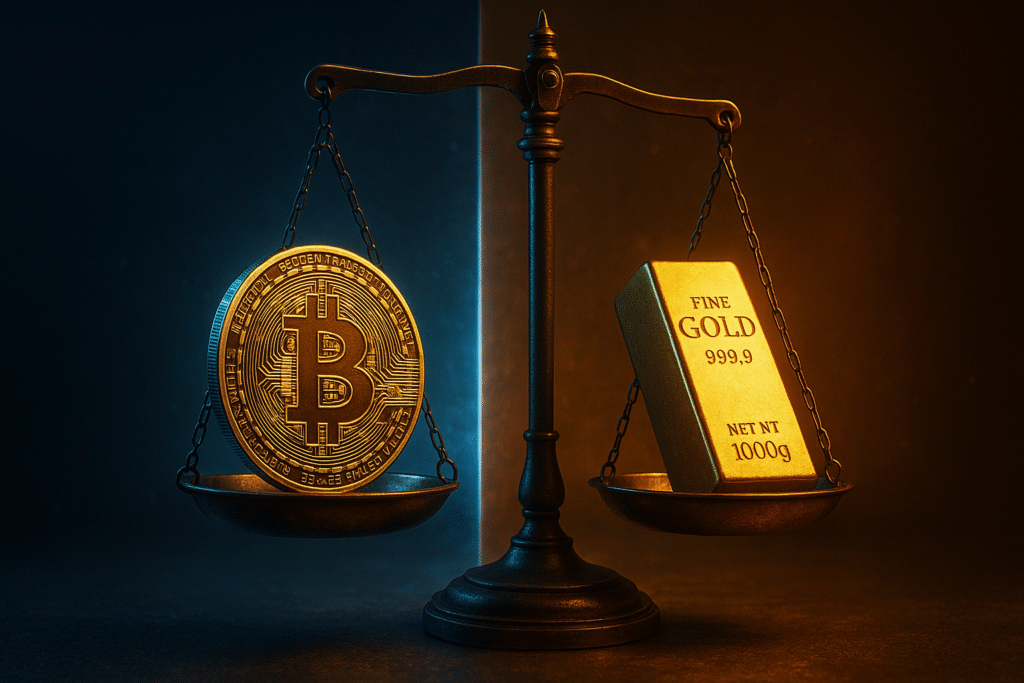
It’s one of the great financial debates of our time, the ancient versus the algorithmic, the shiny metal versus the shiny code. Gold has been humanity’s store of value for millennia, while Bitcoin is barely old enough to get a driver’s license. Yet both share a common purpose: to preserve wealth in a world that can’t stop inflating it. One is dug out of the earth; the other is mined from math. So which one truly deserves the crown of “best store of value”? Let’s weigh them, metaphorically, of course.
Gold’s case is as old as civilization itself. For over 5,000 years, it has been the ultimate symbol of stability. It doesn’t rust, corrode, or depend on an internet connection. It has survived wars, collapses, and revolutions, a safe haven that doesn’t care who’s in power or what currency is trending. Central banks hoard it, investors trust it, and it’s universally recognized as wealth. Gold’s value isn’t based on promises or programming; it’s rooted in physical scarcity and human history. Simply put, gold has the longest resume in finance.
Bitcoin, on the other hand, is the new challenger, digital, decentralized, and defiant. It was created as an answer to the fragility of traditional systems, offering a supply cap of 21 million coins and a transparent, borderless network. Its fans argue that Bitcoin improves on gold’s flaws: it’s easier to store, easier to send, and impossible to counterfeit. You can carry millions in Bitcoin on a flash drive (or in your head, if you remember your seed phrase), something no gold bar can match. And unlike gold, Bitcoin is programmable, it fits perfectly into a digital world where value moves at the speed of light.
But volatility remains Bitcoin’s biggest Achilles’ heel. While gold moves with the patience of a glacier, Bitcoin can behave like a caffeinated kangaroo, soaring and diving within hours. For long-term investors seeking peace of mind, that unpredictability is a dealbreaker. Gold, for all its lack of excitement, offers consistency. It doesn’t need hype to hold value; it just does. Bitcoin, meanwhile, thrives on belief and adoption, its store-of-value status depends on how many people continue to see it that way.
In truth, the debate may be less about competition and more about evolution. Gold is the legacy system, proven, physical, and timeless. Bitcoin is the upgrade, digital, decentralized, and adaptive. Many investors now hold both: gold for protection, Bitcoin for potential. Together, they bridge two eras of value, one forged by fire, the other by code. So which is the better store of value? That depends on your faith: in history, or in the future. But one thing’s for sure, both glitter, just in very different ways.