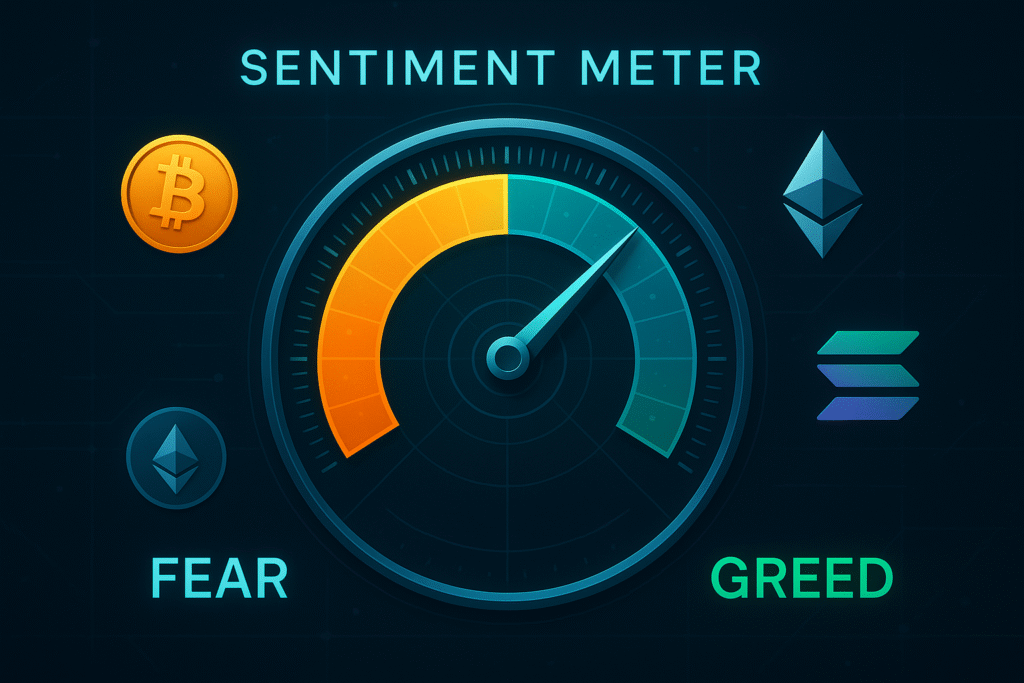
If the crypto market had emotions, it would probably need therapy. One moment it’s euphoric, chanting “to the moon,” and the next, it’s curled up in a corner muttering about crashes. That’s where the Fear and Greed Index comes in – a tool that doesn’t just track numbers, but the mood swings of millions of investors. It’s basically a thermometer for crypto emotions, helping traders figure out when the market is trembling in fear or high on optimism.
The Fear and Greed Index is designed to simplify the messy psychology of the market. It measures sentiment on a scale from 0 (extreme fear) to 100 (extreme greed). When it’s near zero, people are panicking – prices are falling, Twitter looks like a doomsday scroll, and investors can’t hit the sell button fast enough. When it’s near 100, the opposite happens – everyone suddenly becomes a “crypto expert,” convinced that prices can only go up forever. The index gathers data from sources like volatility, volume, social media trends, and market dominance to create a snapshot of overall sentiment.
But here’s the irony: the best investors often do the opposite of what the index shows. When the market is drowning in fear, that’s usually when prices are cheapest – a potential golden entry point. When greed takes over, that’s often when the smart money quietly slips out the back door. In short, the Fear and Greed Index doesn’t tell you what to do – it tells you what everyone else is doing. And knowing that can be a powerful edge.
Still, the index isn’t some crystal ball. It doesn’t predict the future; it reflects the present. Markets can stay greedy longer than expected, or fearful longer than logic allows. A reading of “Extreme Fear” might signal a good buying opportunity, or it might just mean more pain ahead. That’s why wise investors use it as a guide, not a gospel. Combining it with fundamentals, technical analysis, and a bit of common sense is what turns sentiment into strategy.
In the end, the Fear and Greed Index is less about numbers and more about human behavior. It reminds investors that behind every chart and price candle are emotions, excitement, panic, hope, regret. Those who learn to read that emotion, and not be ruled by it – tend to last longest in crypto’s wild emotional rollercoaster. Because sometimes, the real skill isn’t predicting the next move… it’s keeping your own emotions in check while the market loses its mind.